

Glow in the Dark Rice for Sensory Bin
Have you ever seen your child’s eyes light up when something literally glows in the dark?
You know that magical moment when an activity turns into an unforgettable experience?
This glow in the dark rice sensory bin delivers just that—a hands-on adventure that sparks creativity, calms little minds, and adds a pop of neon fun to your playtime routine.
Think of this activity like a mini firework show in a sensory bin. It’s low-prep, big-impact, and bursting with texture and color. Perfect for quiet time, rainy afternoons, or any day you need a little extra sparkle.

Searching for more glow in the dark fun? Try out this fun glow in the dark play dough recipe.
Supplies Needed for Glow in the Dark Sensory Bin
Here’s a breakdown of everything you’ll need to successfully whip up this neon sensory bin. Creating glow in the dark rice for sensory bins is easier than you think, but it does require the right tools and a little preparation to make the magic happen.
Essential Ingredients
Your glow in the dark sensory bin relies on a few core ingredients. Before starting, gather all the items you need to bring this glowing sensory adventure to life. Having everything on hand will save you time and frustration later.
- Dried rice: The star of the show—plain white rice works best.
- Acrylic paints: Choose vibrant turquoise, light blue, dark blue, and lime green for a mix of glowing hues.
- Glow in the Dark Paint: The secret to the fun of this sensory bin.
- Zip-lock bags: Ideal for an easy and mess-free mixing process.
- Wax paper: To prevent sticking during the drying process.
- Cooking sheet: A flat surface to spread the rice for drying.
- Plastic bin with sides: The sensory bin base for all the glowing fun.
- Scoops, spoons, and cups: Optional but highly recommended for tactile play.
When shopping for your ingredients, consider opting for high-quality paint to enhance the texture and longevity of your sensory bin. Little upgrades like that can make a big difference.
Tools You’ll Need
Dying rice is more than just a few ingredients. You'll need to cook this one, so here are some things you'll want to make sure you have on hand.
- Zip-lock bags: Ideal for an easy and mess-free mixing process.
- Wax paper: To prevent sticking during the drying process.
- Cooking sheet: A flat surface to spread the rice for drying.
- Plastic bin with sides: The sensory bin base for all the glowing fun.
- Scoops, spoons, and cups: Optional but highly recommended for tactile play.
- Airtight Container or Resealable Bag: Essential for storing your playdough to keep it fresh and pliable for days, if not weeks.
If you need more inspiration for sensory materials, check out How to Make a Valentine’s Day Sensory Bin for Preschoolers for more creative ideas.
Step-by-Step Glow in the Dark Rice Recipe for Sensory Bins
Ready to get crafting? Find the instructions below!
Glow in the Dark Rice for Sensory Bin
Create a magical sensory experience with this easy glow in the dark rice for a sensory bin activity. Perfect for preschoolers, this hands-on bin supports sensory development and creative play . . . all while glowing beautifully in the dark. A must try for sensory loving kiddos and curious little scientists alike.
Materials
- Dried Rice
- Glow in the Dark Paint
- Acrylic Paint (turquoise, light blue, dark blue, lime green)
Tools
- Sandwich sized baggies
- Measuring cups and spoons
- Wax Paper
- Plastic bin with sides for sensory bin
- Scoops, cups and fun tools for sensory play
Instructions
- Gather your ingredients
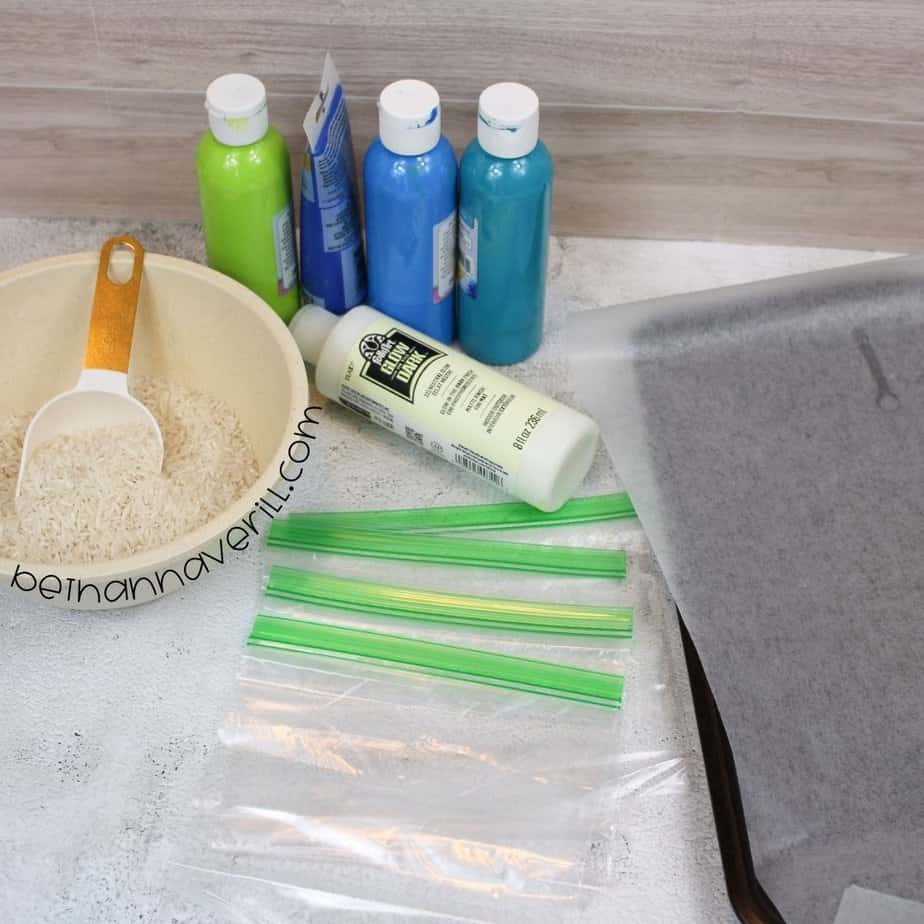
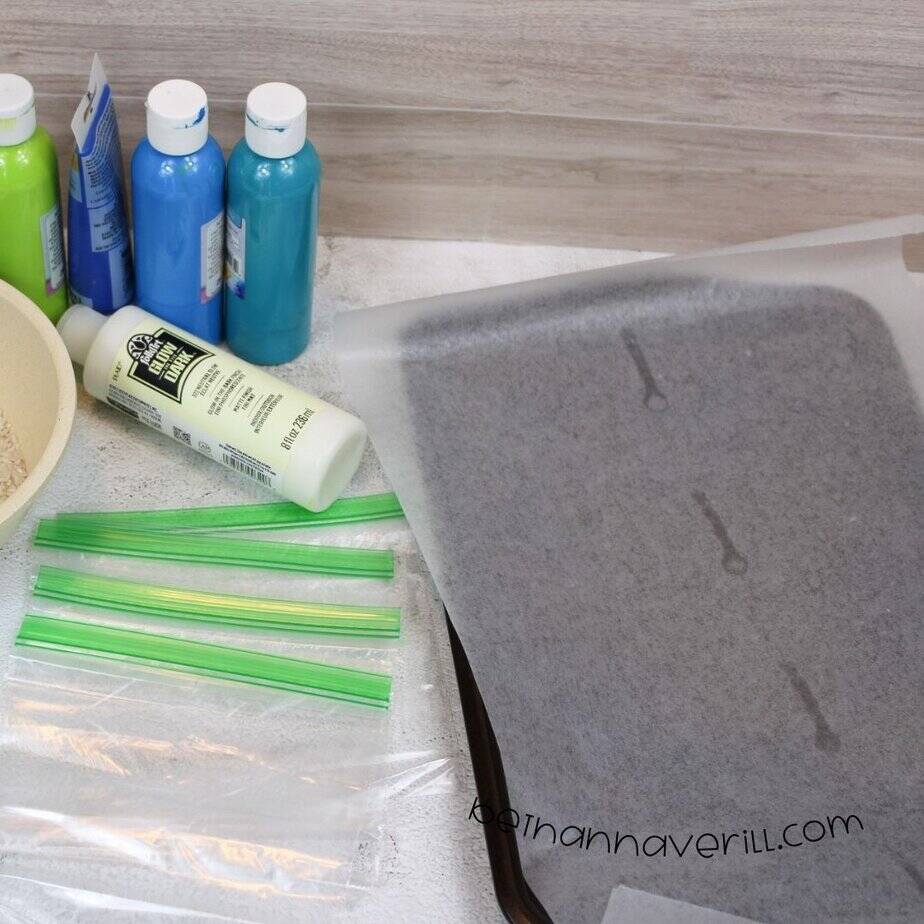
- Prepare the cooking sheet with wax paper and set it aside.
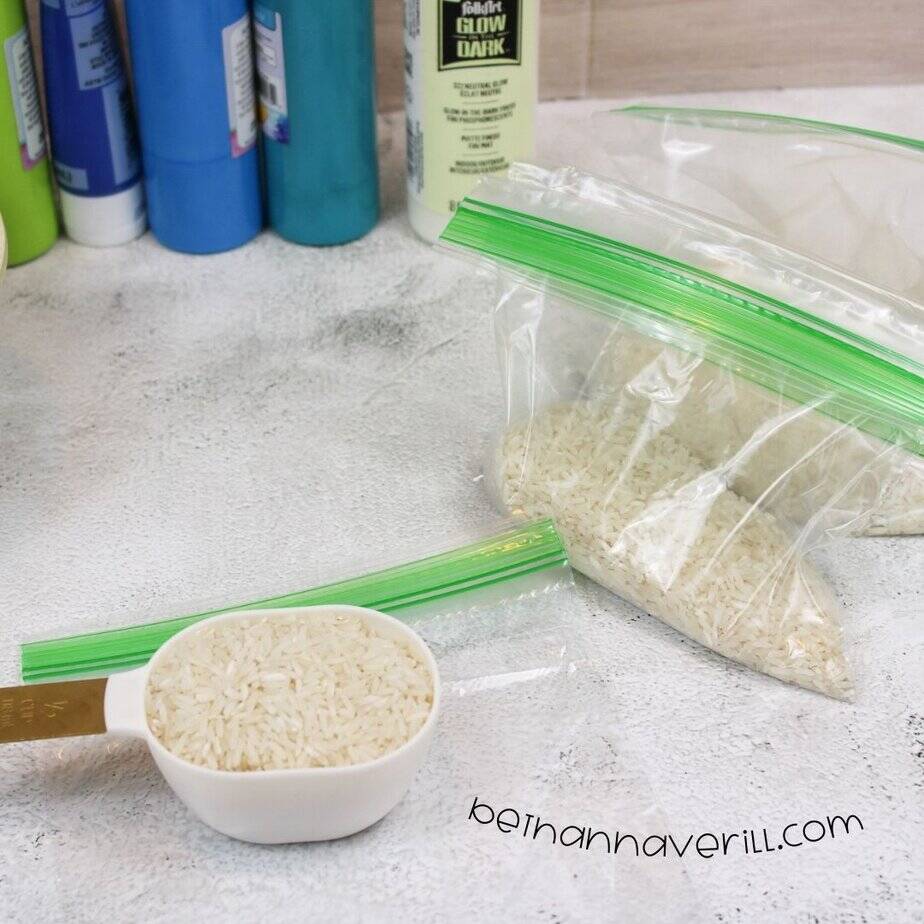
- Pour ½ cup of dried rice into each zip-lock bag.
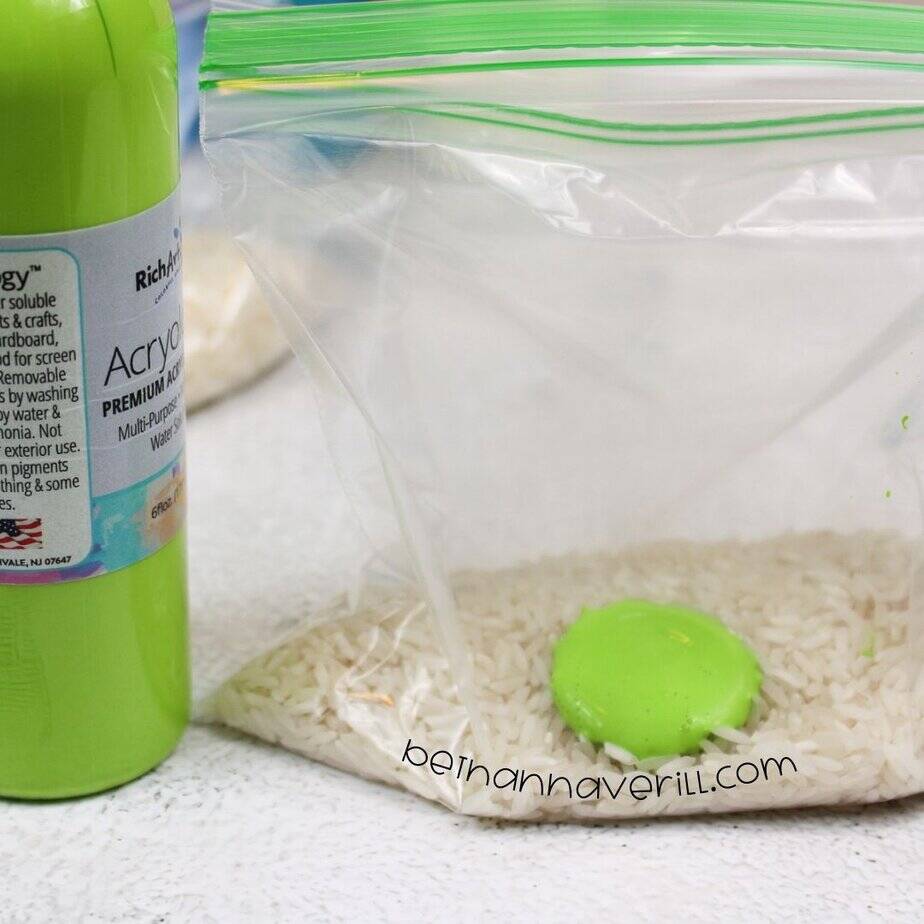
- Squeeze in 1 tsp of paint into each bag.
- Squeeze in 1 Tbsp of glow-in-the-dark paint into each bag.
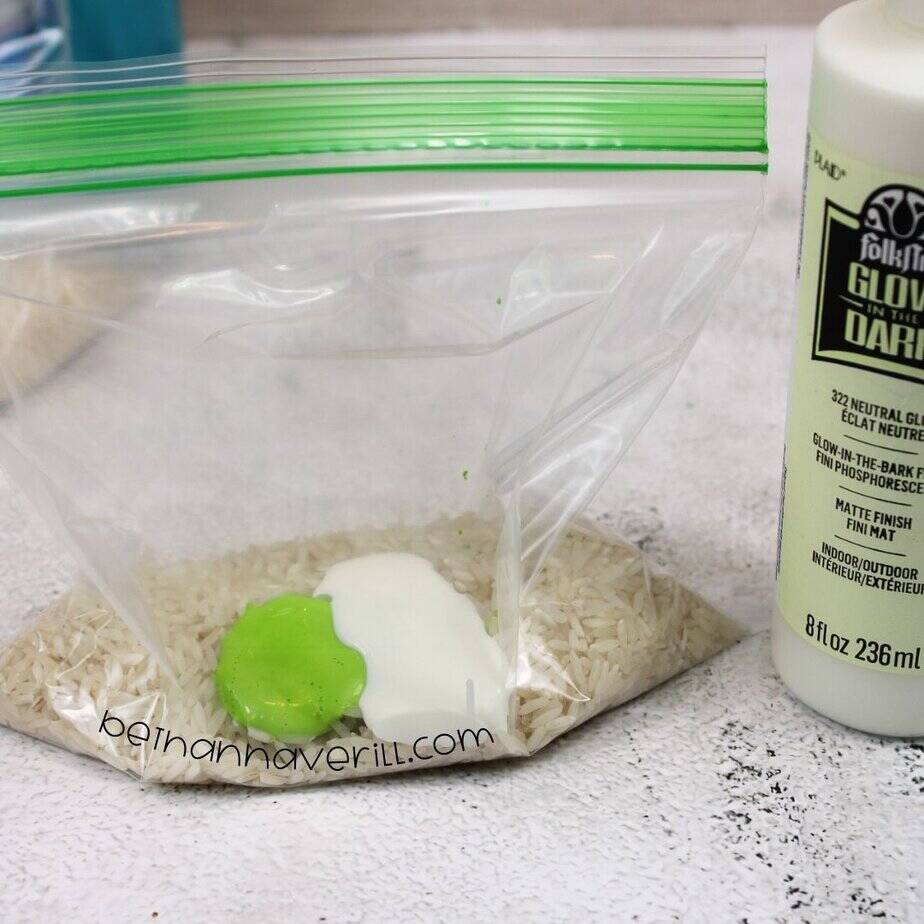
- Remove the air and seal the baggies. Shake each baggie to coat the rice with the
paints.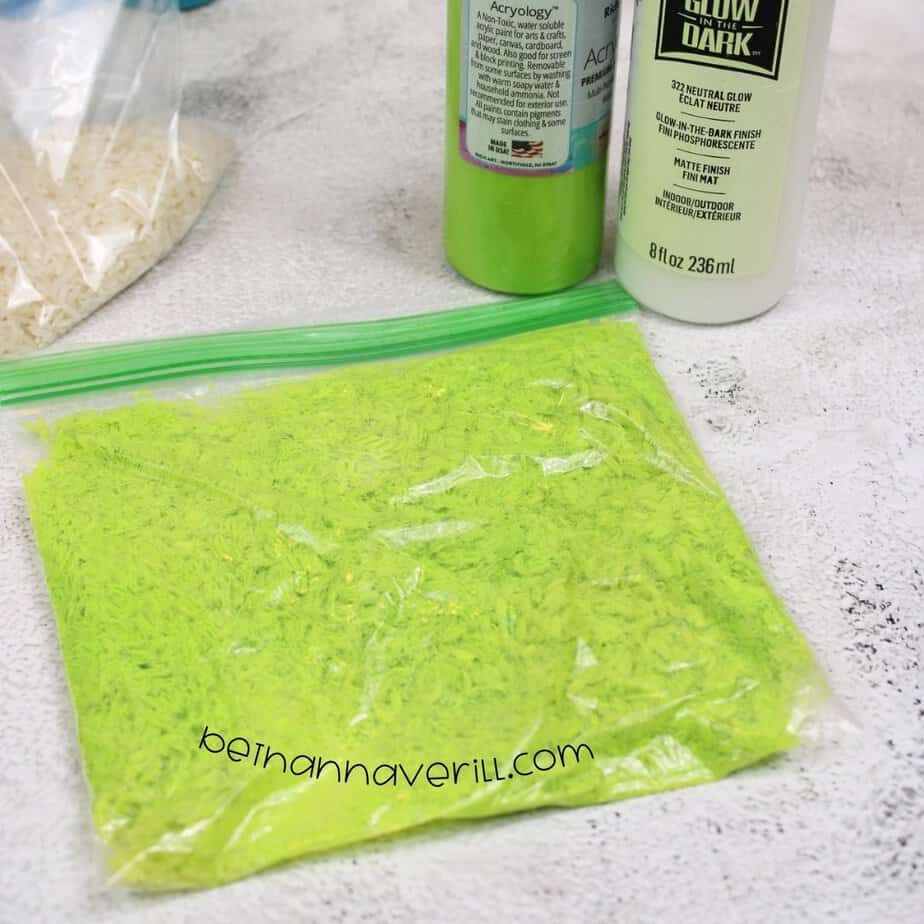
- Repeat for all colors.
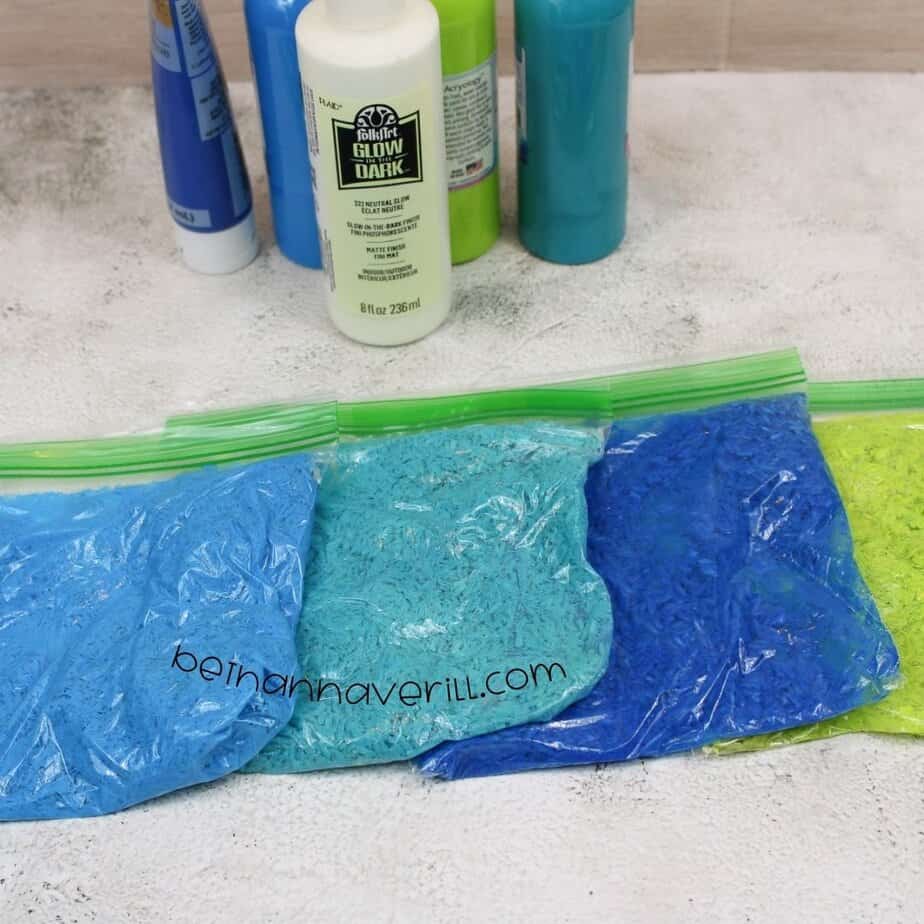
- Carefully pour the rice onto the prepared cooking sheet.
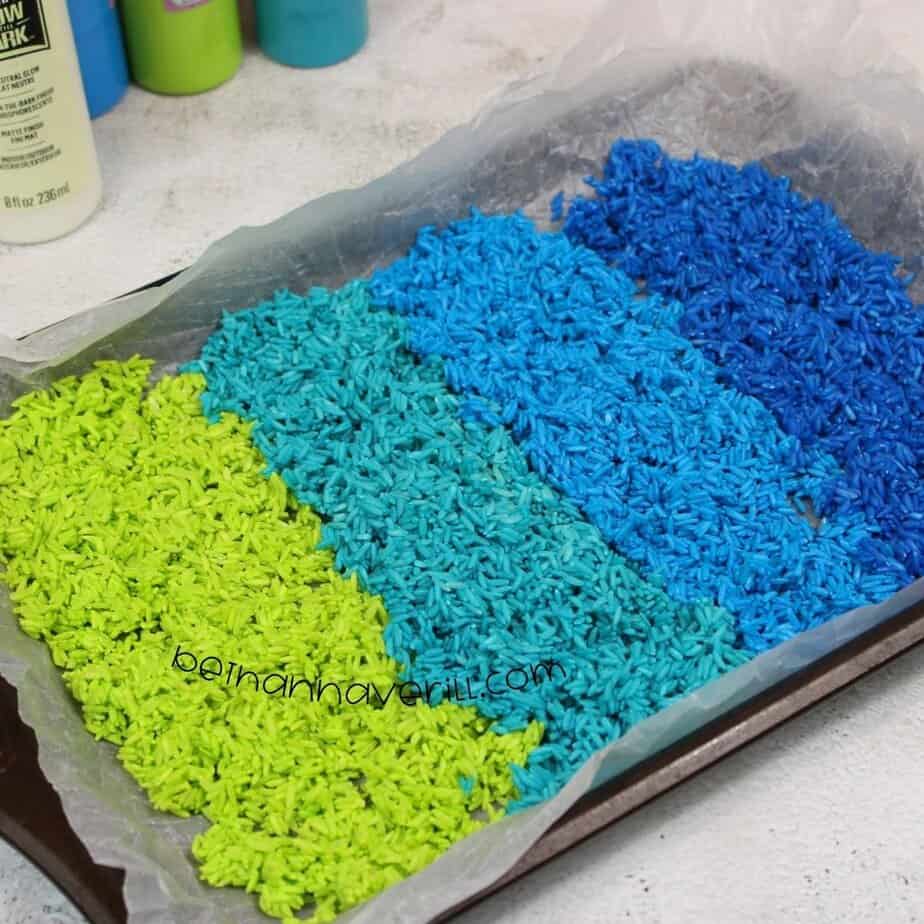
- Allow the rice to dry for 3-4 hours or overnight.
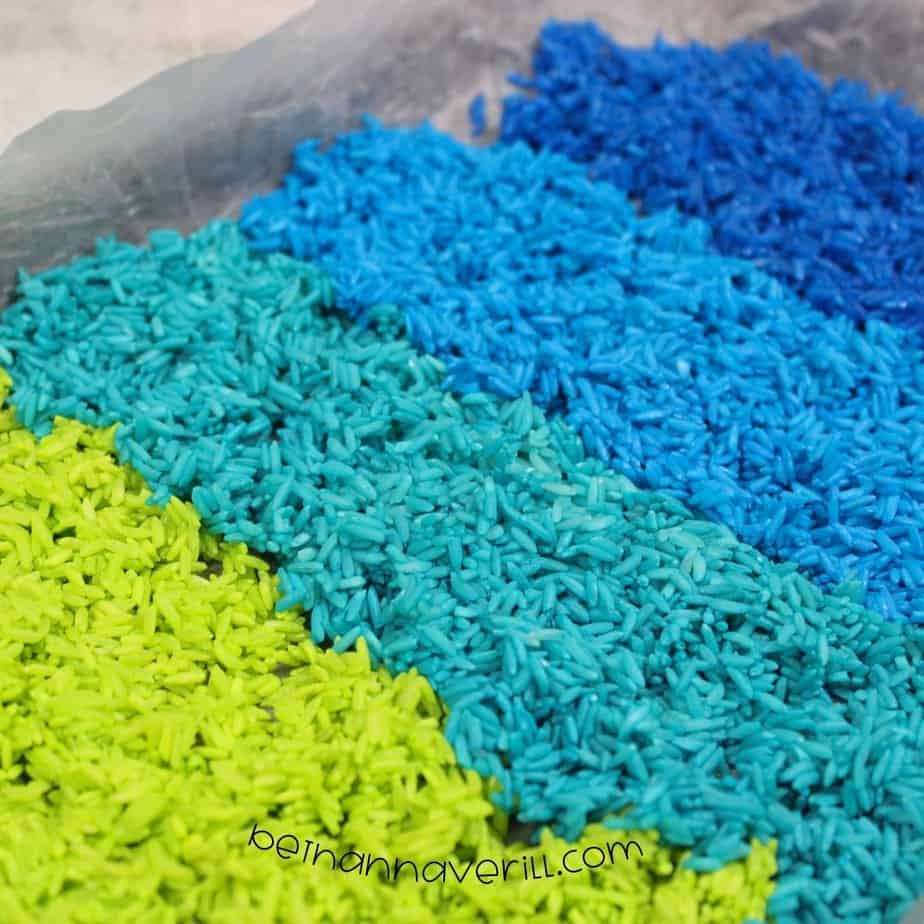
- Mix the dried rice by hand and add it to a plastic bin.
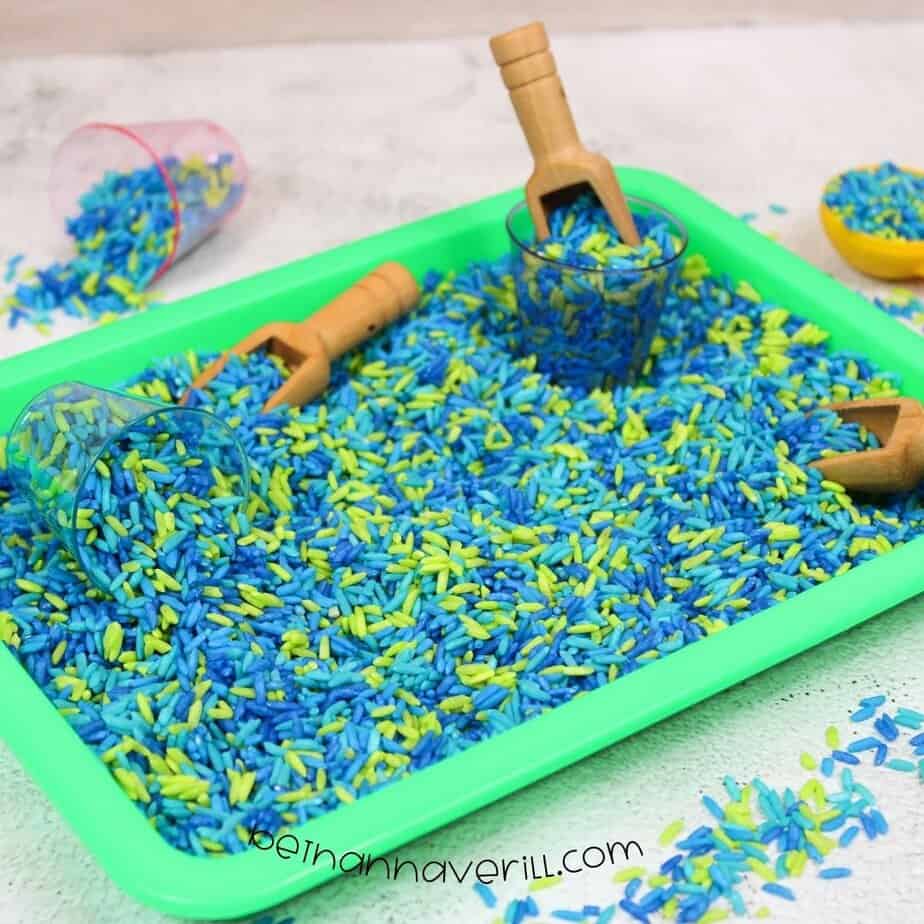
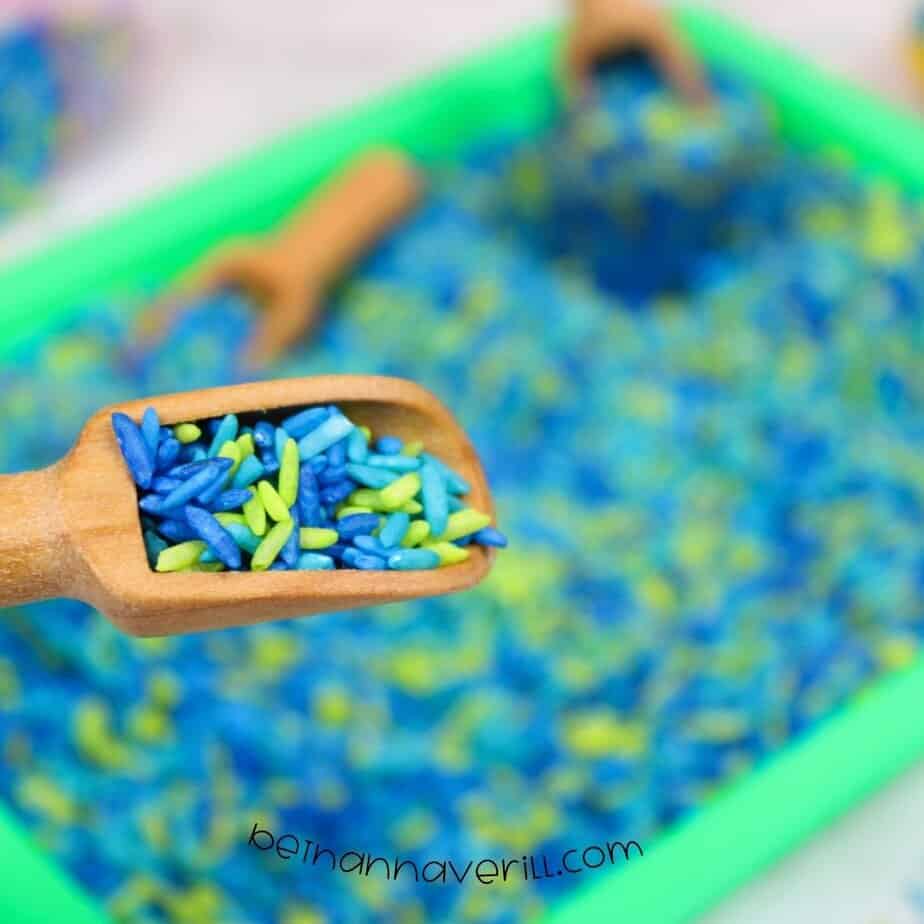
- Add cups, scoops, and spoons.
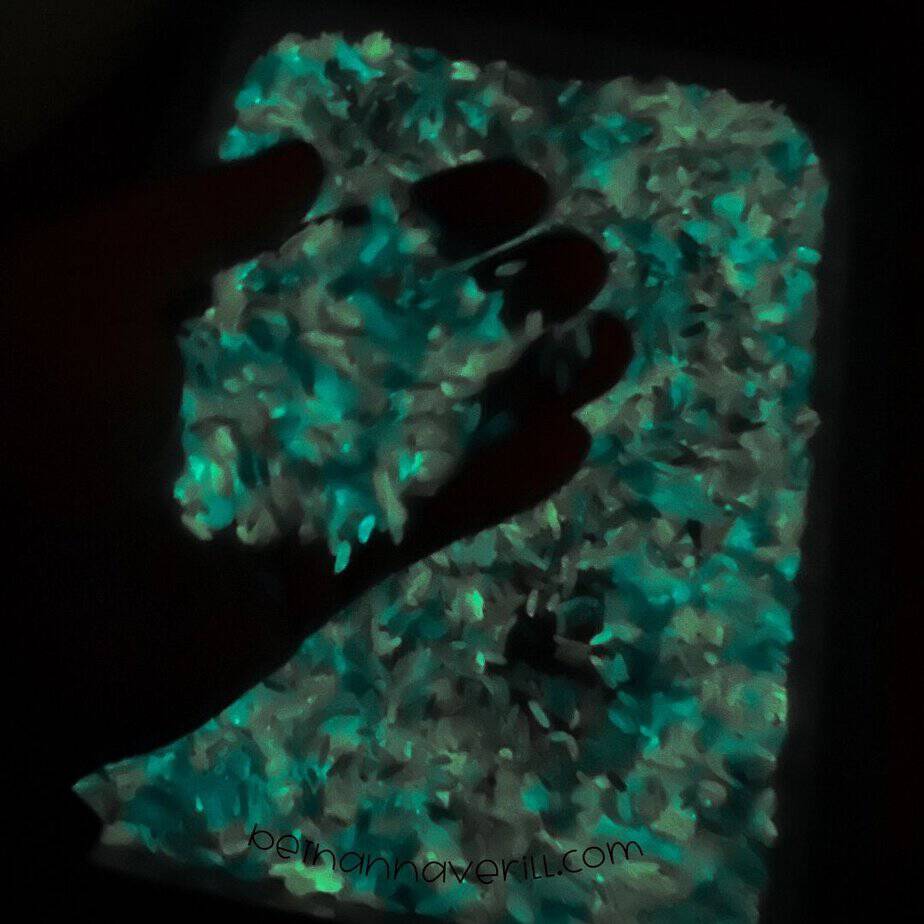
- Turn off the lights for a fun glow in the dark experience.
Safety Tips and Cleanup
Having glowing sensory rice is amazing, but it’s important to keep safety a priority. Here are a few tips to ensure your kids stay safe while having a blast.
- Paint and Rice Safety: Even though you’re using glow-in-the-dark paint, remind kids this rice is not for eating! Always keep an eye on younger children during playtime.
- Proper Storage: To keep the rice fresh and ready for reuse, seal it in an airtight zip-lock bag or a container with a tight-fitting lid.
- Easy Cleanup:
- Use a plastic bin with tall sides to minimize spillage.
- Have a small handheld vacuum or broom handy for picking up stray grains.
- Lay a plastic mat or an old sheet under the play area to catch any mess.
By following these guidelines, you’ll have an exciting sensory activity with minimal fuss afterward. Engage your children’s senses, foster their creativity, and above all, have fun watching them explore. You’ve got this!
Creative Ways to Use Glow in the Dark Rice
Glow in the dark rice isn’t just a mesmerizing sensory bin filler—it’s an incredibly versatile tool that can transform playtime into an imaginative and educational experience. From themed adventures to sneaky learning moments, there’s no shortage of creative ways to make the most out of this glowing masterpiece.
Themed Sensory Bin Ideas
Turn glow in the dark rice into the star of a themed sensory bin. The soft glow sets the stage for magical play that’s as visually engaging as it is fun. Here are a few ideas to get you started:
- Under the Sea: Pair the glowing rice with small sea animal figurines, seashells, and a sprinkle of blue tiny gems. Watch your little one dive into a magical underwater world.
- Outer Space: Use silver star confetti, tiny rockets, and astronaut toys. Bonus points if you mix in black and purple rice for a galaxy-like effect.
- Halloween: Add tiny pumpkins, plastic spiders, and mini cauldrons for eerie, glow-in-the-dark fun that’s perfect for spooky season.
Including sets of themed toys gets their imagination running, while the glowing rice encourages tactile interaction and discovery. You have all the power to create vibrant, mini worlds right in your living room.
Learning Opportunities
Glow in the dark rice isn’t just about the fun (though we know that’s the best part). It’s an excellent opportunity to sneak in some hands-on learning, too. Whether you’re practicing numbers or letters, there’s endless potential for educational play.
Here are some ideas to make it educational:
- Letter Recognition: Hide magnetic letters or foam alphabet pieces in the rice. Challenge your child to find them, naming each one as they dig.
- Math Games: Use the rice to practice counting, sorting, or creating patterns. For example, ask your child to scoop a specific number of grains into tiny cups to work on number skills in a whole new way.
If you love sensory bins for learning, try out your next bin by exploring the Construction Alphabet Sensory Bin for Preschoolers. It’s packed with creative ideas for connecting sensory play with education.
Long-Term Storage and Reuse
Once you’ve created your glowing sensory masterpiece, one question quickly follows: how can you keep it fresh and glowing for future fun?
Luckily, glow in the dark rice for sensory bins is incredibly low maintenance.
With a few insider tips, you can store it properly and even revive its glow for repeated use.
Your hard work creating this enchanting sensory material doesn’t have to go to waste.
Storage Solutions
To keep your glowing rice clean, vibrant, and ready for action, proper storage is really the only thing you need to worry about.
You wouldn’t leave an open bag of flour lying around, right? The same principle applies here. Sturdy, airtight containers or zip-lock bags work wonders for safe storage.
- Stackable containers: These are your best bet for keeping the rice free from moisture and debris. Bonus points if the container is clear, so you can admire the beautiful glowing colors without opening it.
- Zip-lock bags: Perfect if you’re short on shelf space or need an easy, portable option. Just squeeze out as much air as you can before sealing.
- Label the storage: If you’ve gone the extra mile and created different glowing rice colors, labeling each container or bag saves you time when setting up the sensory bin next time.
By following these simple steps, you can ensure your rice remains as magical as the first day you made it.
Reviving the Glow
The glow in glow-in-the-dark rice doesn’t last forever without a little help. Like a rechargeable battery, it needs occasional recharges to keep its brilliance alive. If you notice the glow starting to dim, don’t worry—it’s easy to fix.
Here’s how to give your glowing rice a fresh burst of illumination:
- Sunshine: Place the rice near a window or directly under some sunlight for 10-15 minutes. Natural light is one of the best ways to recharge the glow and works like magic.
- Artificial light: Don’t have sunny weather? A strong lamp or flashlight will do the trick. Simply lay the rice out in a thin layer near the light source.
- Repeat as needed: The brighter the exposure, the more intense the glow will be. Short sessions work great if you recharge it regularly.
Recharging the rice is not just easy—it’s another opportunity to teach your kids some basic science concepts.
For instance, why not talk about how light energy works? If you’re on the creative sensory play journey, why not also check out Glow in the Dark Play Dough Recipe? It’s yet another fun and educational activity your kids will love.
By following these tips, you’ll ensure that your sensory bin filled with glow in the dark rice stays captivating for countless play sessions to come. Plus, it feels great knowing you’ve created something reusable, reducing waste while maximizing fun.
Please Share This Glow in the Dark Rice for Sensory Bin How to
Your shares are how this site grows and I am sincerely grateful. Know a friend who’d like this? Please share it on Facebook or save it to your favorite kids’ activity board on Pinterest.


