

DIY Rainbow Rice: Fun and Easy Guide for Parents
Ever heard of DIY Rainbow Rice? It's a hit among parents of preschoolers for a reason. This vibrant, colorful rice isn't just beautiful to look at; it’s a fantastic sensory play material for kids too. Think about it – easy to make, mess-free, and educational. What’s not to love? Parents can use it to spark creativity, teach colors, and even improve motor skills. Stick around, and you'll discover how to make your own rainbow rice in no time. Ready to add a splash of color to playtime? Let's get started!

Some of the links below are affiliate links. That means I may make a commission if you click and buy. Please see my full disclosure policy for more information.
What is DIY Rainbow Rice?
DIY Rainbow Rice is a simple and colorful craft project for parents and preschoolers. The process involves dyeing plain rice with vibrant colors to create a sensory play material that's both fun and educational. But what exactly makes it so special? Let’s break it down further.
Why Make DIY Rainbow Rice?
When you make DIY Rainbow Rice, you’re not just creating a fun activity but also a tool that aids in your child's development. Here’s why it’s worth making:
- Visual Appeal: The bright colors attract children and make playtime more engaging.
- Sensory Play: The texture of the rice is perfect for helping young kids develop their fine motor skills.
- Educational Value: It’s a fantastic way to teach colors and basic counting.
- Easy to Clean: Unlike many other sensory materials, rainbow rice is less messy and easy to clean up.
What You Need to Make DIY Rainbow Rice
Creating your own DIY Rainbow Rice is straightforward, and you probably already have most of the ingredients at home. Here’s what you’ll need:
- White Rice: Any kind of white rice works for this project.
- Food Coloring: Liquid food colors in various shades.
- Ziploc Bags: For mixing the rice and dye.
- Baking Sheet: For drying the rice.
Steps to Make DIY Rainbow Rice
Ready to get crafting? Find the instructions below!
DIY Rainbow Rice

Materials
- Rice
- Sandwich Bag
- Food coloring
- Parchment Paper
Tools
- Cookie Sheet
Instructions
- Gather your supplies.
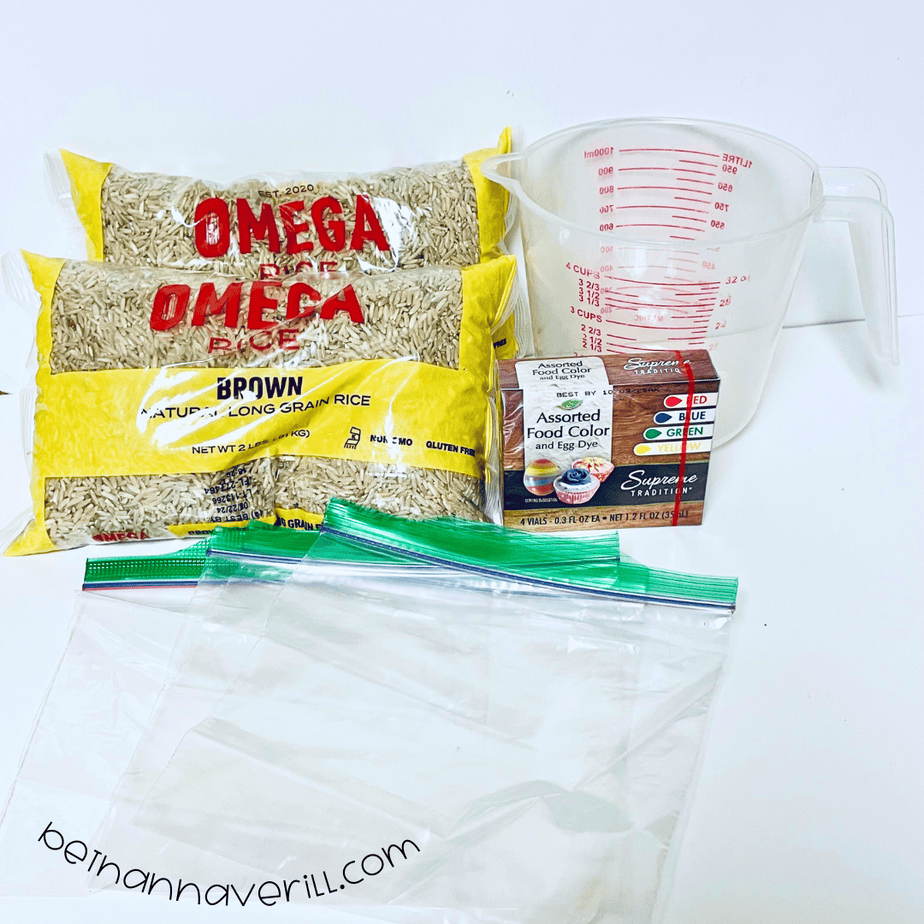
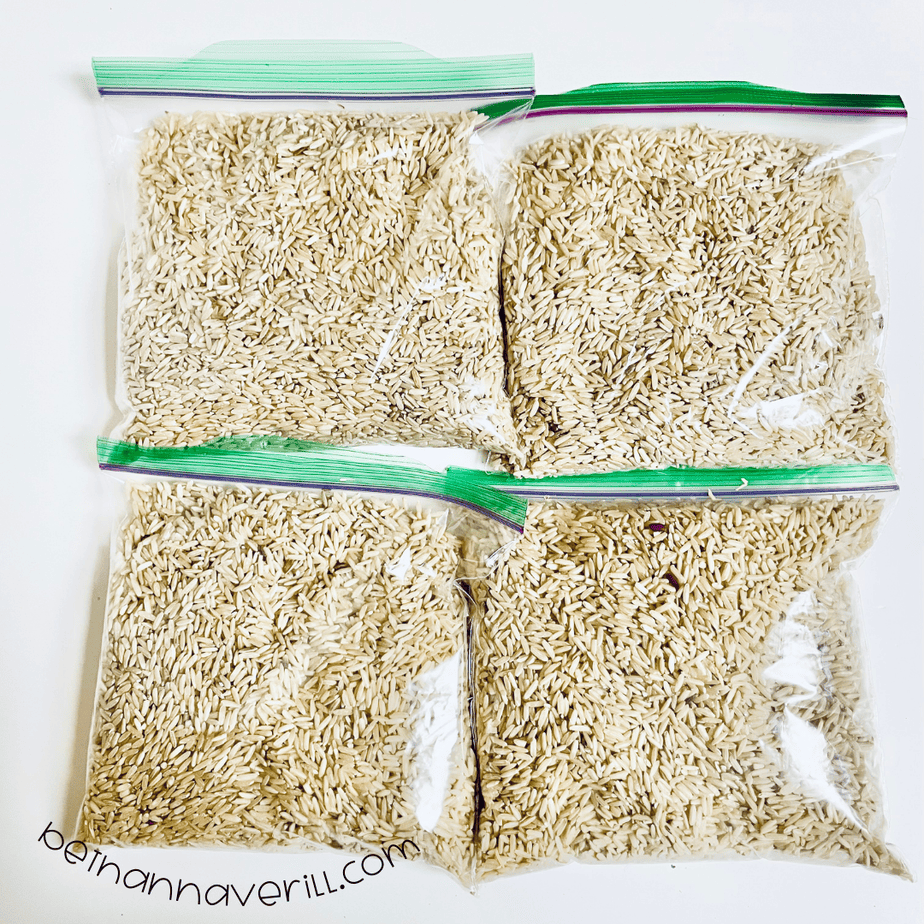
- Divide the Rice: Portion out the white rice into separate Ziploc bags, one for each color you want to make.
- Add Dye: Add a few drops of food coloring and a teaspoon of vinegar or rubbing alcohol to each bag.
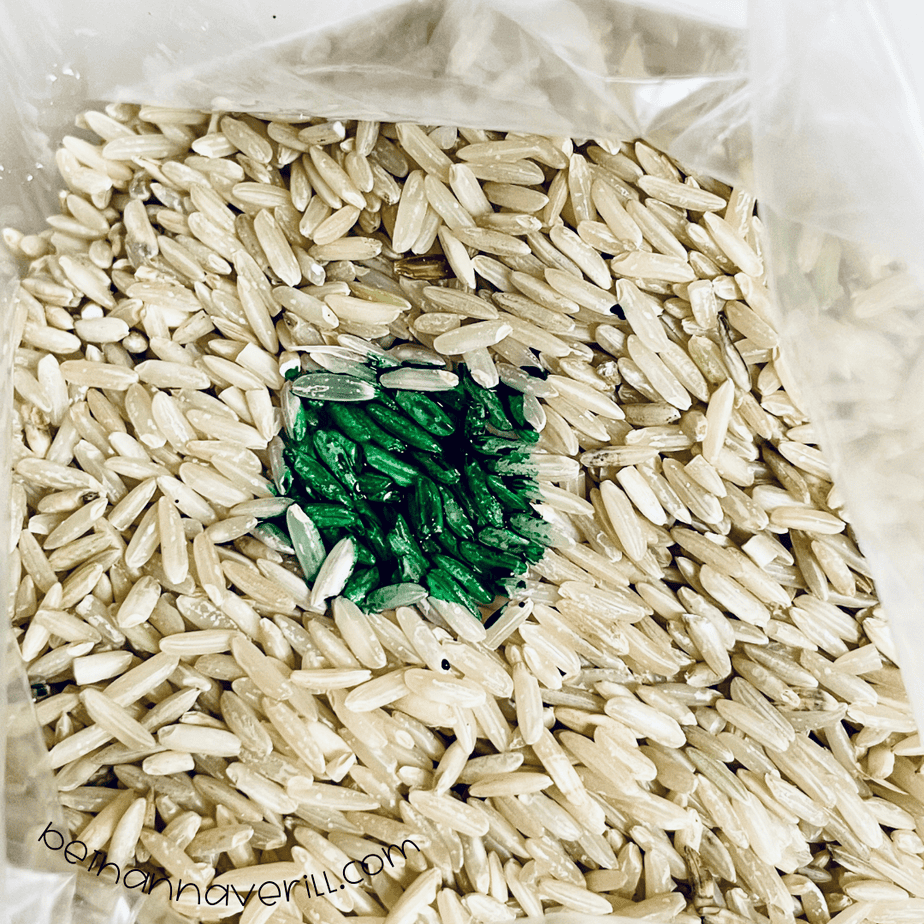
- Mix: Seal the bags and shake them well until the rice is fully coated with color.

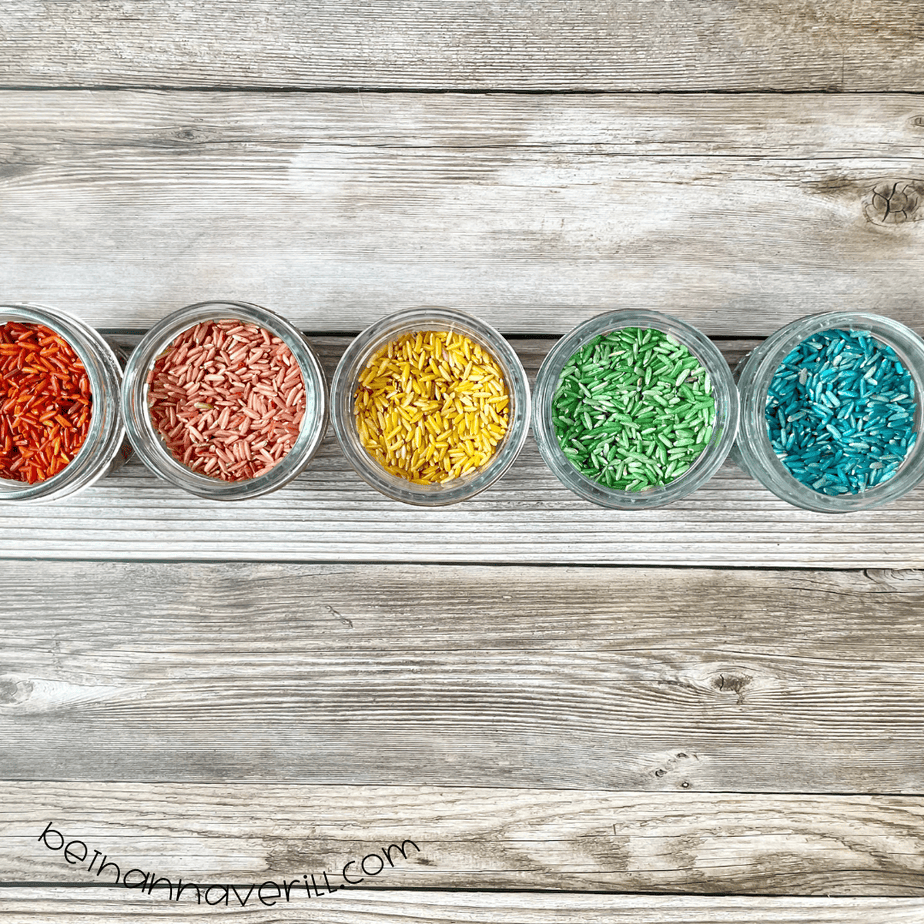
- Dry: Spread the dyed rice on a baking sheet and let it dry completely, which usually takes a few hours. You can also bake in an oven at 200 degree for 15-20 to speed up the drying process.

- Play!
Benefits of Rainbow Rice for Preschoolers
DIY Rainbow Rice is not just an entertaining craft activity; it’s also hugely beneficial for preschoolers in numerous ways. From sensory development to learning basic skills, rainbow rice offers a multitude of advantages that make it an excellent educational tool for young children.
Sensory Play
Sensory play is crucial for the development of young children, and rainbow rice excels in this area.
- Texture Exploration: The feel of rice running through little fingers provides a fantastic sensory experience. It helps kids learn about different textures and sensations.
- Colorful Stimulation: Bright colors can stimulate the visual senses and keep children engaged for longer periods.
Color Recognition
Teaching colors can sometimes be a challenge, but DIY colored rice makes it fun and interactive.
- Visual Learning: By playing with different shades, children can easily learn to identify and differentiate between colors.
- Interactive Lessons: Parents can create games that involve sorting or finding specific colors within a sensory bin.
Fine Motor Skill Development
Fine motor skills are essential for tasks like writing, buttoning, and using utensils. Rainbow rice can help enhance these skills.
- Grasping and Pinching: Manipulating the small grains of rice requires precision and control, which strengthens the small muscles in the hands and fingers.
- Scooping and Pouring: Using scoops, spoons, and funnels to move rice from one container to another helps develop hand-eye coordination.
Cognitive Skills
Beyond physical benefits, rainbow rice can also boost cognitive skills in preschoolers.
- Problem Solving: Simple activities, like filling containers or making patterns, encourage problem-solving and critical thinking.
- Sorting and Classifying: Organizing the rice by color or using it for counting games helps kids develop sorting and classifying skills.
Emotional Development
Playing with rainbow rice can also be calming and therapeutic, aiding in emotional development.
- Calming Effect: Sifting through rice can be very soothing, helping to reduce anxiety and increase concentration.
- Expressing Creativity: Children can use the rice to create pictures or layouts, offering an outlet for creative expression.
Creative Ways to Use DIY Rainbow Rice
DIY Rainbow Rice isn't just beautiful and fun; it’s incredibly versatile! Whether you are looking to create themed sensory bins, explore art projects, or engage in educational activities, this colorful rice has got you covered. Here are some creative ways to use DIY Rainbow Rice to keep your preschooler entertained and learning.
Sensory Bins
Creating themed sensory bins using rainbow rice can be a wonderful way to stimulate your child's senses. Here are some ideas to get you started:
- Under the Sea: Use blue rice to mimic the ocean and add small toy sea creatures. Include shells and pebbles to enhance the underwater experience.
- Farmyard Fun: Utilize green and brown rice to simulate a grassy field and soil. Add miniature farm animals, tractors, and even some toy vegetables.
- Outer Space: Combine black and silver rice with small star and planet toys, creating a cosmic sensory bin that feels out of this world.
Art Projects
DIY Rainbow Rice can be a fantastic addition to your art supplies. Here’s how you can use it in creative projects:
- Collages: Have your child spread glue on a piece of construction paper and sprinkle different colors of rice on top to create vibrant collages. They can form shapes, letters, or even abstract art.
- Mosaics: Create stunning mosaics by gluing colored rice onto a template. For example, draw a simple image like a flower or a sun and fill in different sections with various rice colors for a beautiful effect.
Learning Activities
Educational activities using rainbow rice can make learning fun for your preschooler. Consider these ideas:
- Color Sorting: Provide a tray with sections and ask your child to sort different colored rice into the appropriate section. This helps with color recognition and cognitive development.
- Counting: Use rainbow rice to practice counting skills. Have your child count scoops of rice into containers, or even count the grains within each color.
- Letter and Shape Formation: Spread a thin layer of rice in a shallow tray and have your child use their finger or a small stick to draw letters or shapes. This activity is great for practicing fine motor control and early writing skills.
Frequently Asked Questions about DIY Rainbow Rice
DIY Rainbow Rice is popular among parents of preschoolers, and it often brings up a few common questions. Here are some answers to help you get the most out of your colorful creation.
How Long Does Rainbow Rice Last?
Rainbow Rice can last quite a long time if stored properly. Here's how to make sure it stays fresh and vibrant:
- Storage: Keep the colored rice in airtight containers or ziplock bags. This will protect it from moisture and contaminants.
- Dry Environment: Store the containers in a cool, dry place. Excessive moisture can cause the rice and the dye to spoil.
- Inspect Regularly: Before each use, give the rice a quick check to ensure there's no mold or unpleasant smell.
If stored properly, your rainbow rice can last for months, providing endless fun for your youngsters.
Can I Use Other Types of Rice?
Yes, you can certainly use other types of rice, but the results may vary. Let's break it down:
- White Rice: This is the most common type used for rainbow rice. It absorbs color well and has a nice, neutral texture.
- Brown Rice: While it's eco-friendly, brown rice doesn't absorb color as vibrantly as white rice. The natural brown hue can dull the colors slightly.
- Basmati or Jasmine Rice: These types can work, but their longer grains may change the texture and feel of the sensory play.
- Wild Rice: Not recommended. Its natural dark color and mixed grains won't achieve the bright, colorful effect you’re aiming for.
When choosing the type of rice, consider how bright and vibrant you want the colors to be. White rice is usually the best option for achieving those vivid hues.
Please Share This DIY Rainbow Rice Tutorial
Your shares are how this site grows and I am sincerely grateful. Know a friend who’d like this? Please share it on Facebook or save it to your favorite kids’ activity board on Pinterest.


